Insights from the Unified Wine & Grape Symposium Panel Moderated by Randy Heinzen
January 28, 2026
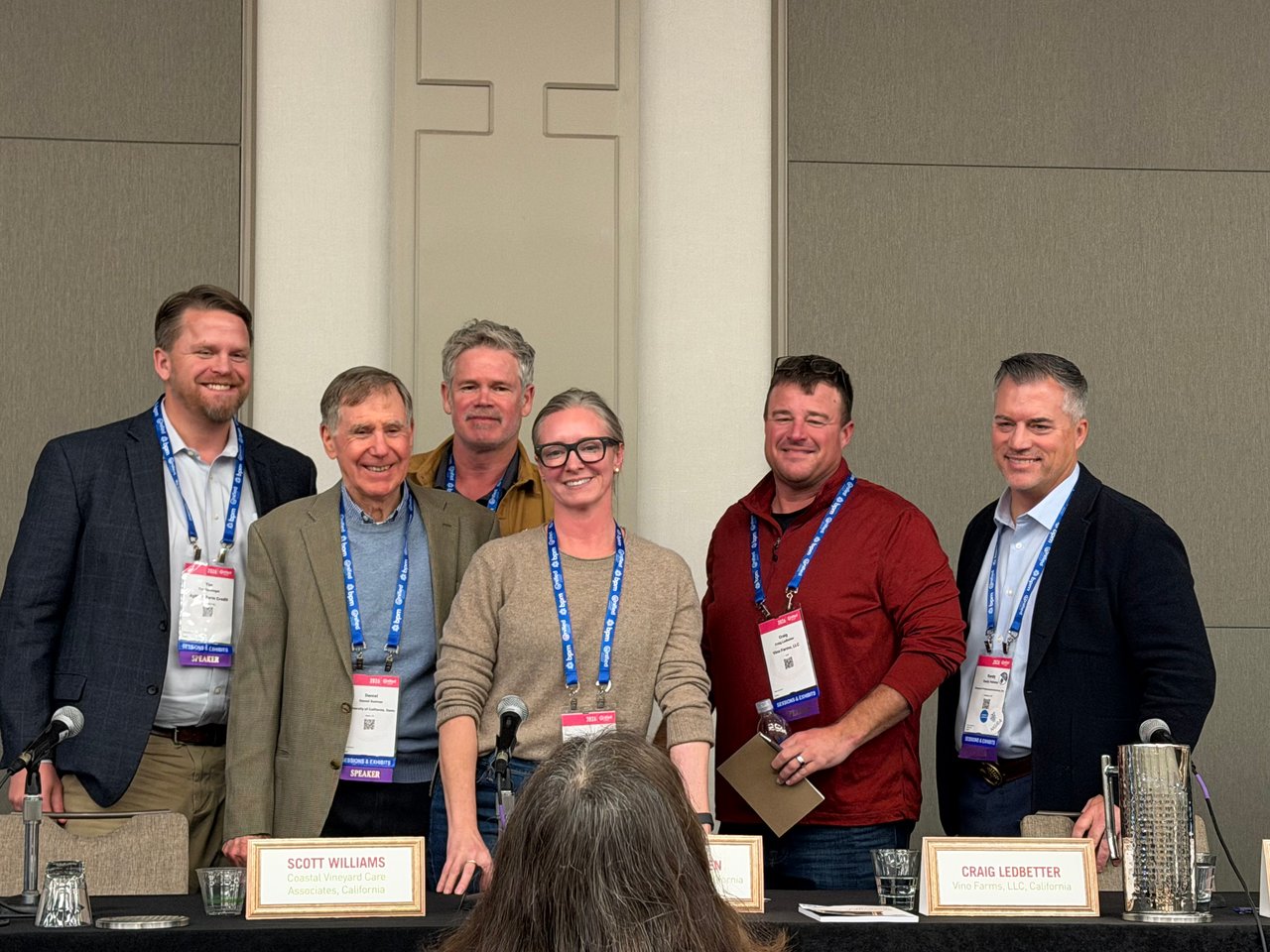
At this year’s Unified Wine & Grape Symposium, Randy Heinzen, President of Vineyard Professional Services (VPS) — and my husband — had the honor of moderating a timely and impactful breakout session:
“Benchmarking for Vineyard Budget Success: Insights and Practical Applications.”
Bringing together respected voices from finance, farming, and winery leadership, the session tackled one of the most pressing questions facing growers today:
How do we align real vineyard costs with market realities — and stay profitable in a shifting industry?
Setting the Stage: Understanding True Costs
The session opened with Dr. Daniel Sumner of UC Davis presenting updated financial benchmarking data across California’s major growing regions.
The data reinforced what many of us are experiencing in real time:
-
Labor remains one of the largest line items in a vineyard budget — often approaching 70% of total costs in premium, hand-farmed regions.
-
Input costs remain elevated.
-
Interest rates are not keeping pace with returns.
-
Depressed global bulk wine markets continue to influence grape pricing domestically.
When wine prices soften, grape prices follow. And when grape prices compress, vineyard economics tighten.
This is not theoretical. It impacts land values, refinancing decisions, development plans, and transaction timing.
A Tale of Two Paso Robles Regions
One of the clearest takeaways from the session was how dramatically vineyard economics differ — even within the same AVA.
Premium Paso Robles Westside
-
~3.5 tons per acre
-
~$3,500 per ton pricing
-
Heavy reliance on hand labor
-
Higher per-acre management costs
-
Quality-driven return model
Westside farming is intensive and intentional. Lower yields are part of the quality equation. Labor, canopy management, and farming precision are significant cost drivers — but so is reputation. Returns depend on premium positioning and long-term brand alignment.
Paso Robles Eastside / More Mechanized Programs
-
~5+ tons per acre (depending on program)
-
~$1,200–$1,700 per ton pricing
-
Greater use of mechanization
-
Lower labor intensity per acre
-
Volume-driven economic model
On the Eastside, efficiency and scale often matter more than boutique positioning. Equipment investment and yield management drive margins. The per-ton pricing may be lower, but production levels support a different profitability structure.
As Randy guided the discussion, the key message was clear:
There is no universal vineyard budget — even within Paso Robles. Benchmarking must be applied regionally and strategically.
From Data to Decisions: The C-Suite Perspective
The second half of the session featured insights from industry leaders including Tim Kensinger (AgWest Farm Credit), Craig Ledbetter (Vino Farms), Kara Maraden (Foley Family Farms), and Scott Williams (Coastal Vineyard Care Associates).
The panel discussed how benchmarking is used in the real world:
-
Lenders rely on it for underwriting and risk assessment.
-
Insurance and cost studies inform long-term planning.
-
“Well-managed farm” assumptions matter when building budgets.
-
Prior-year budgets should not be blindly reused.
-
Land values must ultimately be supported by grape prices.
That last point is especially important.
In specialized wine regions like Paso Robles Westside, land pricing is often justified by the value of place. But if grape contracts soften or yields fluctuate, that financial equation can tighten quickly.
As one panelist noted, “Wine is such a challenged commodity.” Yet consumption appears to be stabilizing — suggesting this may be a period of recalibration rather than collapse.
Strategic Adaptation in a Changing Market
The conversation also addressed operational realities growers are navigating today:
-
Adjusting shoot thinning and canopy work to align with market demand.
-
Catching up on deferred weed management (which can take 2–3 years to fully correct).
-
Considering mothballing, removal, or redevelopment of underperforming blocks.
-
Critically evaluating budgets rather than assuming last year’s numbers still apply.
Benchmarking is not about comparison for ego’s sake. It is about clarity — and clarity drives better decisions.
Randy closed the session with encouragement that resonated deeply:
Hang in there. Do what you can to stay in business. Make changes if you need to.
And perhaps most refreshing of all:
Don’t take yourselves too seriously. There’s still room to enjoy what we do collectively.
The Natural Intersection of VPS and VPRE
For those who know our family, this panel reflects the natural intersection of our work.
Randy leads Vineyard Professional Services (VPS), one of the Central Coast’s most experienced vineyard management and consulting firms, currently overseeing more than 4,000 acres and specializing in management, budgeting, financial forecasting, development, and sustainable farming.
I lead Vineyard Professional Real Estate (VPRE), where we represent vineyard, winery, and estate transactions for lifestyle buyers, family operators, and institutional investors.
Where VPS builds and budgets vineyard assets, VPRE evaluates and transacts them.
And both rely on the same foundation:
Clear financial understanding, realistic benchmarking, and long-term strategic thinking.
When we represent buyers or sellers, sophisticated clients increasingly ask:
-
Are the vineyard budgets defensible?
-
Do projected returns align with Paso Robles benchmarks?
-
How do management assumptions compare to real-world farming data?
-
Is the land value supported by grape economics?
These are the same questions addressed at Unified.
A successful transaction ultimately requires trust — not only in pricing, but in the agronomic and financial assumptions behind that pricing.
Why Benchmarking Matters More Than Ever
Whether you are:
-
Refinancing vineyard debt
-
Evaluating expansion
-
Preparing a property for sale
-
Considering redevelopment
-
Or simply trying to preserve margin
Benchmarking provides clarity.
In today’s environment, optimism alone is not a strategy. Data, discipline, and regional awareness are.
As this year’s session demonstrated, understanding true costs — and how they compare even within Paso Robles — is essential to optimizing vineyard economics and enhancing long-term profitability.
If you are evaluating your vineyard’s performance or considering your next move, our teams at VPRE and VPS are always here to help you think strategically and move forward with confidence.
— Jenny Heinzen
Vineyard Professional Real Estate (VPRE)
Click here to Join our exclusive market insights newsletter.