Over the past two years, VPRE has represented more than $116 million in vineyard real estate across Paso Robles and the Central Coast, including both leading global wine companies and privately owned vineyard estates.
Land, water rights, production history, infrastructure, and enterprise value are evaluated together, informing an approach that protects value and positions your asset for the right market.
>> Request a Confidential Consultation <<

Vineyard and winery sales involve multiple layers of value, requiring advanced due diligence, thoughtful structuring, and rigorous buyer qualification. Production history, water resources, infrastructure, and brand equity influence how the property is positioned and brought to market. Many include hospitality potential alongside agricultural production.
Considerations include:
• Market positioning and buyer demand
• Agricultural and AVA-specific insight
• Water and infrastructure analysis
• Production and yield review
• Coordinated valuation and asset review
Vineyard sales operate differently. Effective representation reflects that. We focus on depth over volume, with global reach and local authority. Our track record proves it.
We represent and track vineyard transactions, acreage trends, AVA performance, and buyer activity throughout Paso Robles and the greater Central Coast.
Our network includes lifestyle buyers, family offices, high net worth individuals, private operators, established brands, institutional investors, and strategic acquirers actively pursuing vineyard acquisitions across the California Central Coast and beyond.
Relationships and reputation connect your offering to decision-makers, not casual inquiries. Our experience includes representing both billionaire buyers and billion-dollar wine companies.
Land, vines, water resources, improvements, and enterprise value are assessed together, with attention to the element that drives the greatest value for each property. In some cases, that is the vineyard or production facility. In others, it may be the residence or setting.
Access to qualified vineyard buyers and industry networks is central to successful vineyard sales. VPRE connects properties to active vineyard investors, established wine companies, and strategic buyers through targeted outreach and global marketing channels.
• Global exposure through CREXi and LuxuryRealEstate.com, an invitation-only network whose campaigns extend across more than 100 portals in 70+ countries
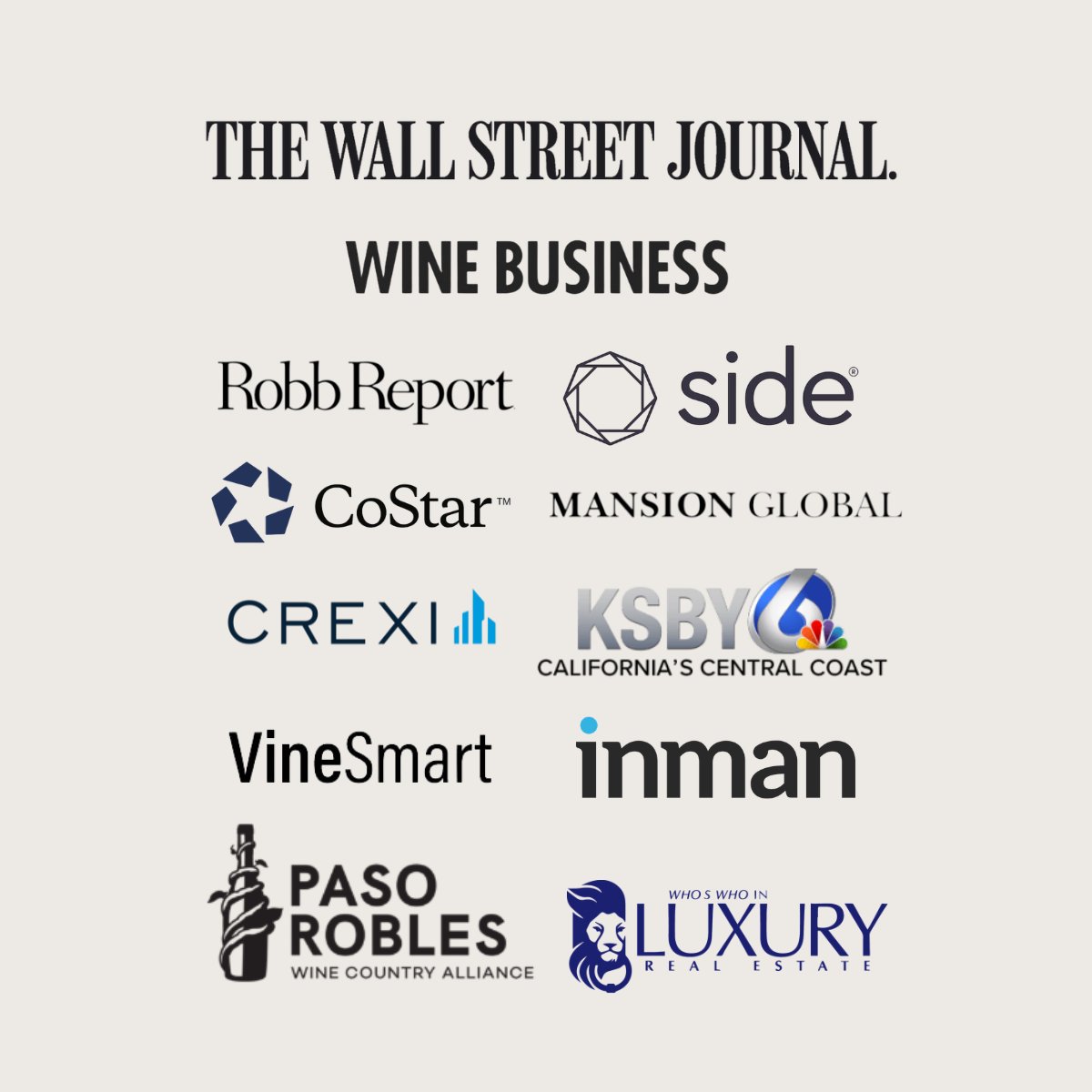
• Strategic placements across leading wine industry publications and real estate platforms
• Featured placement on vineyardprorealestate.com, the leading website dedicated to vineyard and winery sales
• A proprietary email network reaching more than 12,000 qualified subscribers including top brokers and vineyard buyers
• Highly targeted digital campaigns across industry and investment audiences
• Broad syndication through CRMLS and IDX networks across thousands of real estate websites
Together, these channels provide unmatched exposure for vineyard and winery properties across Paso Robles and the Central Coast.
Our role includes:
✔ World-class marketing
✔ Strategic pricing recommendations
✔ Production and operational review
✔ Transaction compliance
✔ Buyer qualification and vetting
✔ Negotiation leadership
Senior-level involvement remains consistent throughout.
VPRE specializes in vineyard and winery properties across Paso Robles and the greater Central Coast, as well as luxury residential estates throughout wine country typically valued over $2M+. From boutique vineyard estates to significant agricultural holdings and high-value homes, our expertise reflects the region’s strongest track records in vineyard sales, supported by: • Deep regional insight • Vineyard and agricultural experience • Valuation-led positioning • Established buyer relationships
Timing and negotiation structured to maximize value and align with your broader goals.
Preparing the property to strengthen its position before going to market. This may include staging, merchandising, and improvements to present the property at its best.
Selling vineyard and winery real estate on California’s Central Coast requires more than a traditional real estate approach. Every property is different, and successful outcomes depend on the right team of professionals — brokers, attorneys, accountants, inspectors, water consultants, land use experts, and others as needed. VPRE is the starting point. Our proven process helps sellers organize due diligence, identify issues early, and position a property to attract qualified buyers.
Valuation starts with location, then improvements, grape economics, water, vineyard quality, permits, and overall asset mix. Every property is different, so pricing requires both comparable sales data and real-time market insight.
For most properties, the real estate is the primary value driver. Location, improvements, water, grape contracts, vineyard condition, permitted uses, and expansion potential usually matter most.
Usually, yes — keep the focus on the real estate. In many cases, a separate business or liquidation process is cleaner, simpler, and more effective than combining everything into one transaction.
Buyers typically want block maps, planting data, yield history, water records, permits, contracts, and inspection materials. If applicable, that may also include septic, building, and home inspection information. Organized due diligence builds confidence and supports value.
Commercial vineyard properties typically take a year or more to sell. Timing depends on pricing, water, quality, complexity, confidentiality, and how well the property is prepared for market.
At VPRE, we market directly to the wine industry through our relationships and industry contacts, while also using effective traditional real estate platforms, targeted print and digital marketing, and exclusive invitation-only groups. The goal is to reach the right buyers through the right channels.
Sometimes yes, sometimes not. It depends on the source, location, basin rules, agreements, and reporting requirements. Water should always be reviewed carefully as part of the sale process.
Common requests include well logs, flow tests, water quality reports, storage information, irrigation maps, shared water agreements, system diagrams, and usage or reporting records. Water is one of the first buyer priorities.
That depends on zoning, county rules, permits, environmental constraints, septic, access, and water availability. Assumptions about tasting rooms, events, lodging, or expansion should always be verified.
Buyers often focus on use permits, winery entitlements, production limits, tasting areas, event permissions, food service approvals, septic approvals, grading records, and occupancy-related approvals.
Not always. Some approvals transfer with the property, while others include operator-specific conditions, historical-use limitations, or review triggers.
These are core value drivers. Buyers look closely at block layout, varietal mix, rootstock, vine age, farming history, yields, quality, and likely replant timing.
The biggest concerns are often weak water, deferred maintenance, poor block performance, disease pressure, missing records, unpermitted improvements, and unrealistic pricing.
They will want to understand bonded status, licensed capacity, storage, wastewater handling, utilities, workflow, condition, and compliance history. A winery facility only adds value if it supports the actual use.
Yes. Items like erosion, creeks, wetlands, grading history, habitat issues, code enforcement, water contamination, and other environmental concerns should be reviewed early whenever possible.
That depends on the contract terms. Some transfer, some require consent, and some terminate upon sale. These should be reviewed early.
No — generally not. In most cases, those items should be handled separately. Keeping the real estate transaction clean usually creates broader buyer appeal and a more efficient process.
Usually, attached items and items that are part of the real estate sale. Examples may include irrigation infrastructure or other permanently attached systems. If equipment is significant, it often requires a separate process and bulk sale escrow outside the real estate transaction.
VPRE generally recommends a public offering to reach more buyers and support the highest price. In certain cases that warrant it, we are accustomed to offering a confidential process.
Focus on the fundamentals: organize due diligence, clarify water, clean up permits, address deferred maintenance, gather inspections if applicable, and price strategically. The goal is to reduce uncertainty and present the property clearly.