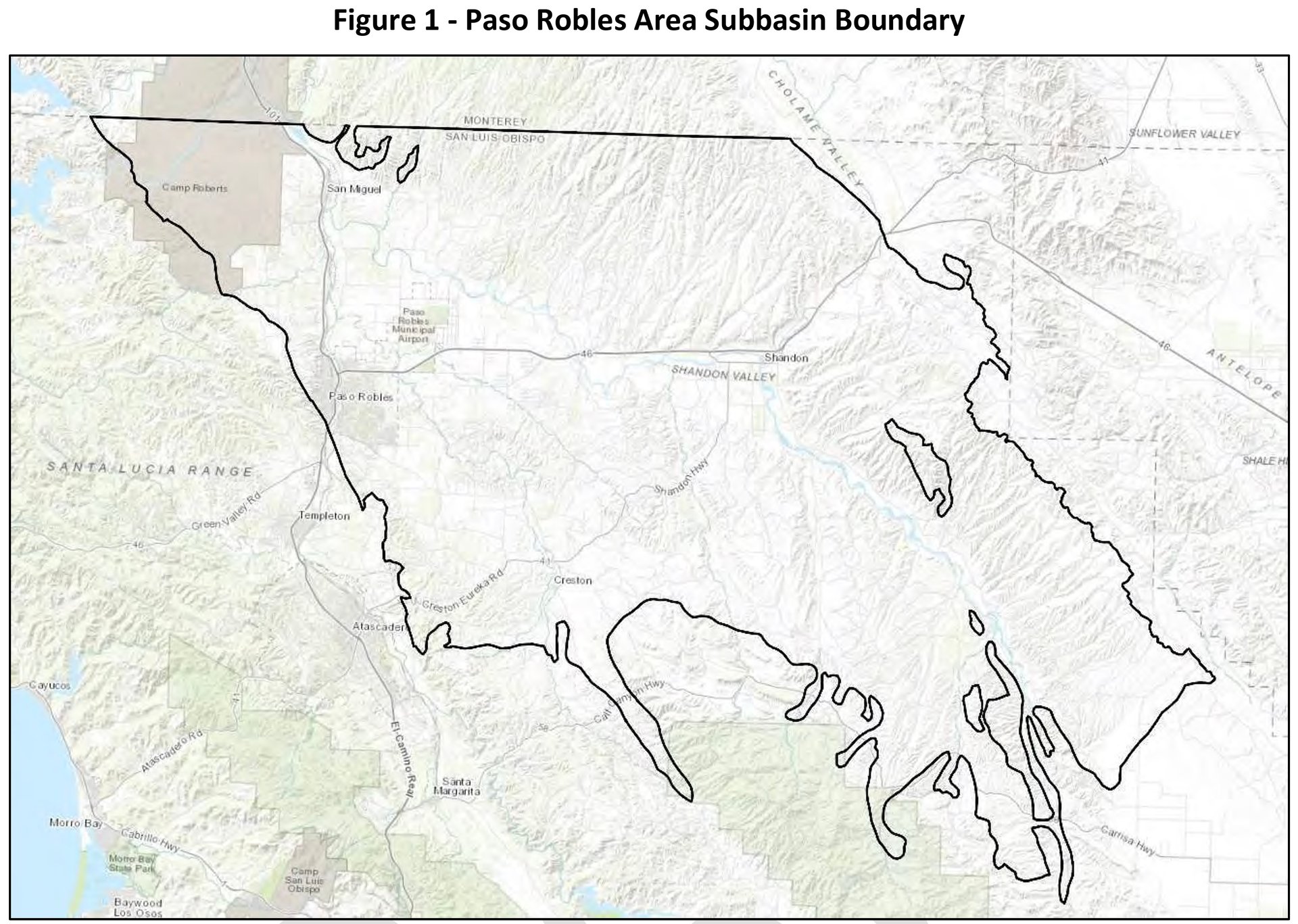
Water has always been one of the most important considerations when buying, selling, planting, or operating agricultural property in Paso Robles. With a new groundwater fee now adopted, along with evolving agricultural offset and voluntary fallowing programs, there is understandably a lot of confusion about what the rules mean for local property owners.
I am not a water attorney or regulatory expert, but water is central to nearly every vineyard and ranch transaction I handle. This is my current understanding of the rules as of July 21, 2026, based on information published by the Paso Robles Area Groundwater Authority, or PRAGA, and the County of San Luis Obispo. These programs continue to evolve, so property owners should confirm how the rules apply to their specific parcel and operation.
The New $22.90 Per Acre-Foot Groundwater Fee
On May 27, 2026, PRAGA adopted a groundwater sustainability fee of $22.90 per acre-foot for fiscal year 2026–2027. The fee is intended to fund PRAGA’s approximately $1.095 million budget for groundwater monitoring, reporting, administration, and implementation of the Groundwater Sustainability Plan required under California’s Sustainable Groundwater Management Act, commonly known as SGMA.
The charge is based on consumed, or net, groundwater use, rather than simply the total amount pumped. For agricultural land, PRAGA used Land IQ satellite-based evapotranspiration data, precipitation information, and local weather-station measurements to estimate the amount of irrigation water actually consumed by crops during Water Year 2025, which ran from October 1, 2024, through September 30, 2025.
The adopted fee applies to agricultural, commercial, and water-system groundwater use within PRAGA’s jurisdiction. Domestic users pumping two acre-feet or less annually for domestic purposes, referred to as de minimis users, are not directly charged under this fee structure. Charges are expected to appear on County property tax bills mailed in fall 2026. PRAGA has stated that this fee was adopted only for fiscal year 2026–2027 and that a future-year fee structure has not yet been established.
For a practical vineyard example, the County uses 1.25 acre-feet per acre per year as the standard water-use factor for wine grapes in its Small Farm Assistance Program. At that factor, a 100-acre vineyard would represent approximately 125 acre-feet of annual use. At $22.90 per acre-foot, the resulting annual fee would be approximately $2,862.50. The actual assessment may differ because the new fee is based on parcel-specific consumptive-use estimates, not simply planted acreage multiplied by a standard factor.
Property owners should review the assessment associated with each parcel, especially following a sale, lease change, crop removal, change in water source, or fallowing. The initial appeal period for the 2026–2027 fee closed June 8, 2026.
The Agricultural Offset Rules
The agricultural offset rules are separate from the new $22.90 fee. They are land-use restrictions intended to prevent new or expanded irrigated agriculture from increasing groundwater demand in the Paso Basin.
In general, new or expanded irrigated crop production in the unincorporated Paso Basin requires an Agricultural Offset Clearance from the County. The rules are currently scheduled to remain in effect through January 1, 2028.
My current understanding is:
Land irrigated with the same crop type and acreage within the five years before an application may generally qualify to be replanted through an Agricultural Offset Exemption.
Planting a new crop or expanding irrigated acreage generally requires an on-site offset showing that the proposed operation will use the same amount of water or less.
If land has not recently been irrigated and is outside the designated Area of Severe Decline, a one-time exemption may allow new irrigated crops using no more than five acre-feet annually, roughly four acres of vineyard under the County’s assumptions.
That five-acre-foot exemption is not available inside the Area of Severe Decline.
Off-site agricultural offsets have not been allowed since December 5, 2019.
These rules make a property’s planting history, crop type, irrigated acreage, prior clearances, and location within or outside the Area of Severe Decline extremely important during due diligence.
The Fallowed Land Registry and the MILR Program
The County is also implementing a voluntary Fallow Land Registry as the first phase of its Multi-Benefit Irrigated Land Repurposing, or MILR, Program. The purpose is to encourage growers to reduce groundwater pumping by temporarily fallowing irrigated land or converting it to a less water-intensive use, while documenting the resulting water savings.
This matters because growers have understandably worried that voluntarily removing a vineyard could cause them to lose the ability to replant later under the agricultural offset ordinance’s five-year lookback rule. Enrollment in the registry is intended to preserve important regulatory recognition of the land’s prior irrigated status. County materials also indicate that approved participation should not disqualify enrolled land from Williamson Act treatment merely because it is no longer actively irrigated.
The registry launched in April 2026. Current County materials describe it as voluntary and generally require at least two acres of fallowed land within a farming unit, Paso Basin groundwater as the water source, and qualifying recent irrigation or agricultural offset approval. Participants are subject to County review, annual recertification, and verification using satellite-based evapotranspiration data. Owners should carefully review the enrollment terms, water-neutrality requirements, and future replanting implications before participating.
The larger MILR effort is still developing in phases. Its stated goal is to provide voluntary demand reduction before mandatory pumping reductions become necessary. In other words, the registry is operating, but the broader program, its funding, incentives, and long-term rules may continue to change.
A Small-Farm Incentive Is Now Available
Beginning June 22, 2026, the County opened a related Small Farm Assistance Program for eligible owners irrigating 20 acres or fewer with Paso Basin groundwater. Approved applicants may receive a one-time payment of $55 per acre-foot of projected water savings in exchange for removing irrigated agriculture and restricting new or additional planting through December 31, 2039.
The County’s example for ten acres of wine grapes assumes 1.25 acre-feet per acre annually. Over 14 years, that equals 175 acre-feet of avoided use and a one-time payment of $9,625. Funding is limited, and an application does not guarantee approval. A deed restriction, weed management, and erosion-control measures are also required.
What This Means for Vineyard and Ranch Owners
The new annual fee is not the only water issue that matters. A property’s value and future use may also be affected by its basin location, historic irrigated acreage, crop history, well production, water source, prior offset approvals, fallowing status, Williamson Act contract, and the accuracy of the consumptive-use data assigned to the parcel.
For buyers, water due diligence should include reviewing available well records, testing wells when appropriate, confirming the property’s basin and Area of Severe Decline status, examining planting history, and verifying any agricultural offset clearance or fallowing enrollment.
If you're evaluating how water rights might affect a specific property's value, our Vineyard Comps tool is a useful next step to see how recent sales in the area have been priced.
For sellers, organizing these records before marketing can help buyers understand the property’s water position and may prevent uncertainty from becoming a negotiating issue.
The fee itself may be relatively modest compared with the overall cost of operating a commercial vineyard. The larger issue is what the evolving rules may mean for future planting, fallowing, pumping, and long-term property value. We will continue watching these programs closely and updating our clients as more information becomes available.
This article is provided for general informational purposes only and reflects Jenny Heinzen’s current understanding as of July 21, 2026. It is not legal, tax, engineering, hydrological, or regulatory advice. Property owners should consult PRAGA, the County of San Luis Obispo, and qualified professional advisers regarding their specific property.
Sources
Paso Robles Area Groundwater Authority, FY 2026–2027 Rate & Fee Study and adopted fee resolution
Paso Robles Area Groundwater Authority, Groundwater Sustainability Fee FAQs
County of San Luis Obispo, Paso Robles Groundwater Basin Agricultural Offset requirements
County of San Luis Obispo, Fallowed Land Registry and MILR Program materials
County of San Luis Obispo, Small Farm Assistance Program